Working with young people means stepping into a world driven by speed, constant stimulation, and increasingly compressed time. Over the years, I’ve chosen to dedicate myself to this: guiding boys and girls, whenever possible, through a journey that goes beyond simple training and becomes something deeply human.
A path that leaves a lasting mark. For me, that path runs through fly fishing, not as a technique to teach or a discipline to master, but as something to truly experience. Because it is right there: whether along a river or on the edge of a lake, something rare happens: time begins to shift.
My name is Alberto Zanghieri. I work as a fly-fishing guide and photographer.
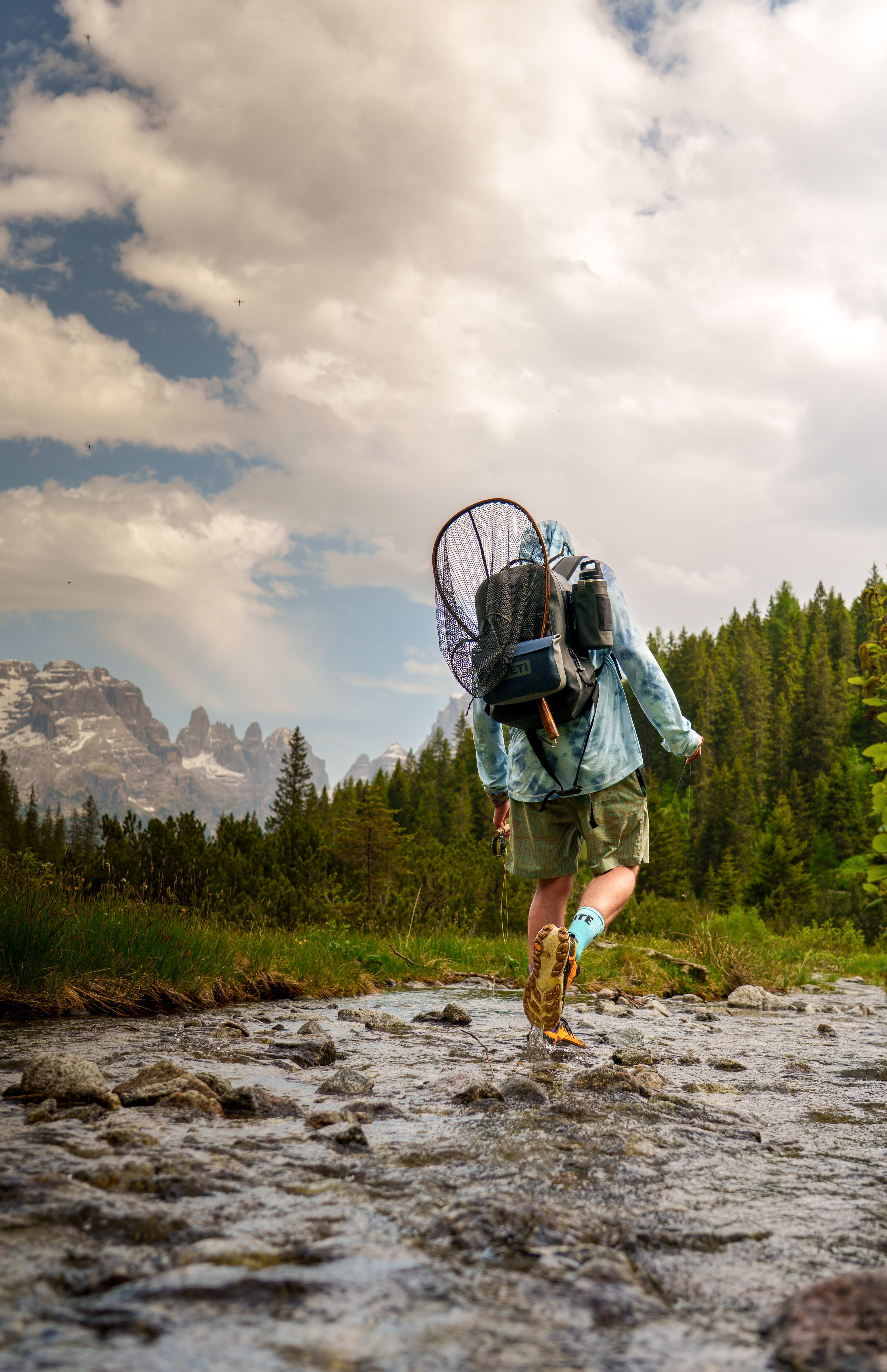
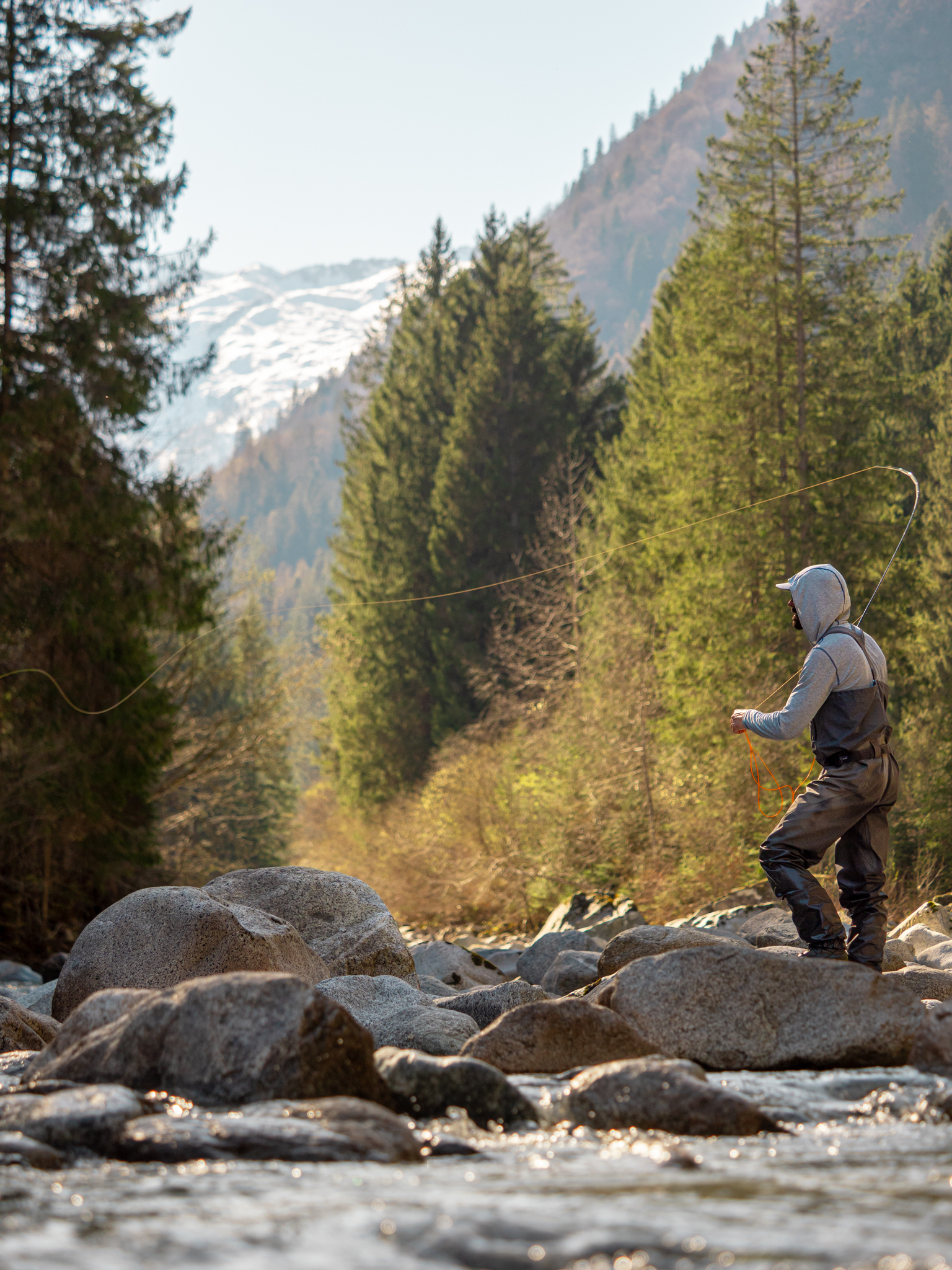
For years I’ve been telling the story of fly-fishing through photography, travelling, and time spent on the water around the world. Here in Val Rendena, in the Italian Alps, my fishing is made of walking, silence, and observation; It is made in unfolding across mountain streams, tributaries, and alpine lakes that set deep within the Adamello Brenta Natural Park. To me, this isn’t just fishing: it is an adventure shaped by respect, enjoyment, nature and beauty.


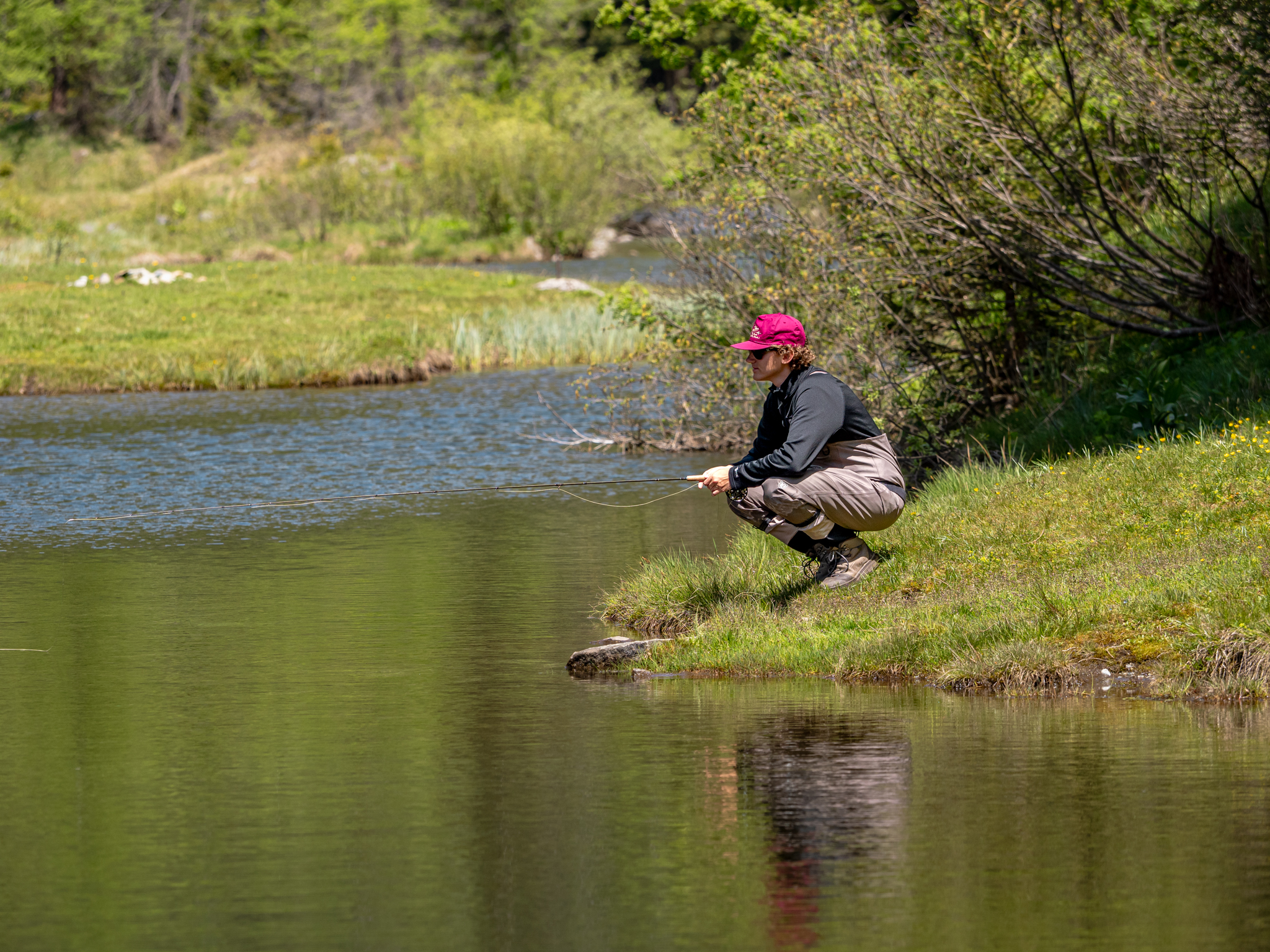
At the beginning, it is not easy. Young people arrive shaped by completely different rhythms. In their daily lives, everything is immediate: answers, content and results. Even their idea of fishing often comes from what they see online rather than real experience- They are used to fast videos, perfect images, trophy catches. A narrative built around outcomes, not the process. But that’s only part of the picture, and often a distorted one. Real fly-fishing is something else entirely. It’s made of attempts, mistakes, and long stretches where nothing happens. It demands observation, silence, and a kind of time that simply cannot be rushed. When these two worlds collide - immediacy and waiting - friction is inevitable. Fly fishing offers no shortcuts. You can’t speed it up, and you can’t fully control it. All you can do is stay, watch, and wait. And in that waiting, the first real obstacle appears: boredom, distraction, impatience. But that’s exactly where real work begins. Slowly, almost without noticing, something shifts. The gaze lingers longer; movements become more deliberate, and silence stops, feeling like something empty that needs to be filled. It becomes a space you can inhabit. In that moment, time stops slipping away and becomes something you actually live. That’s when fly fishing reveals its deeper nature. It’s not just an activity; it’s a way to reconnect with something we often lose, a sense of presence, attention, and relationship with the world around us. Details start to matter: the movement of the flow, changing light, an insect touching the surface, signals that once went unseen. It’s no longer just about catching a fish, but about understanding what’s happening around you.
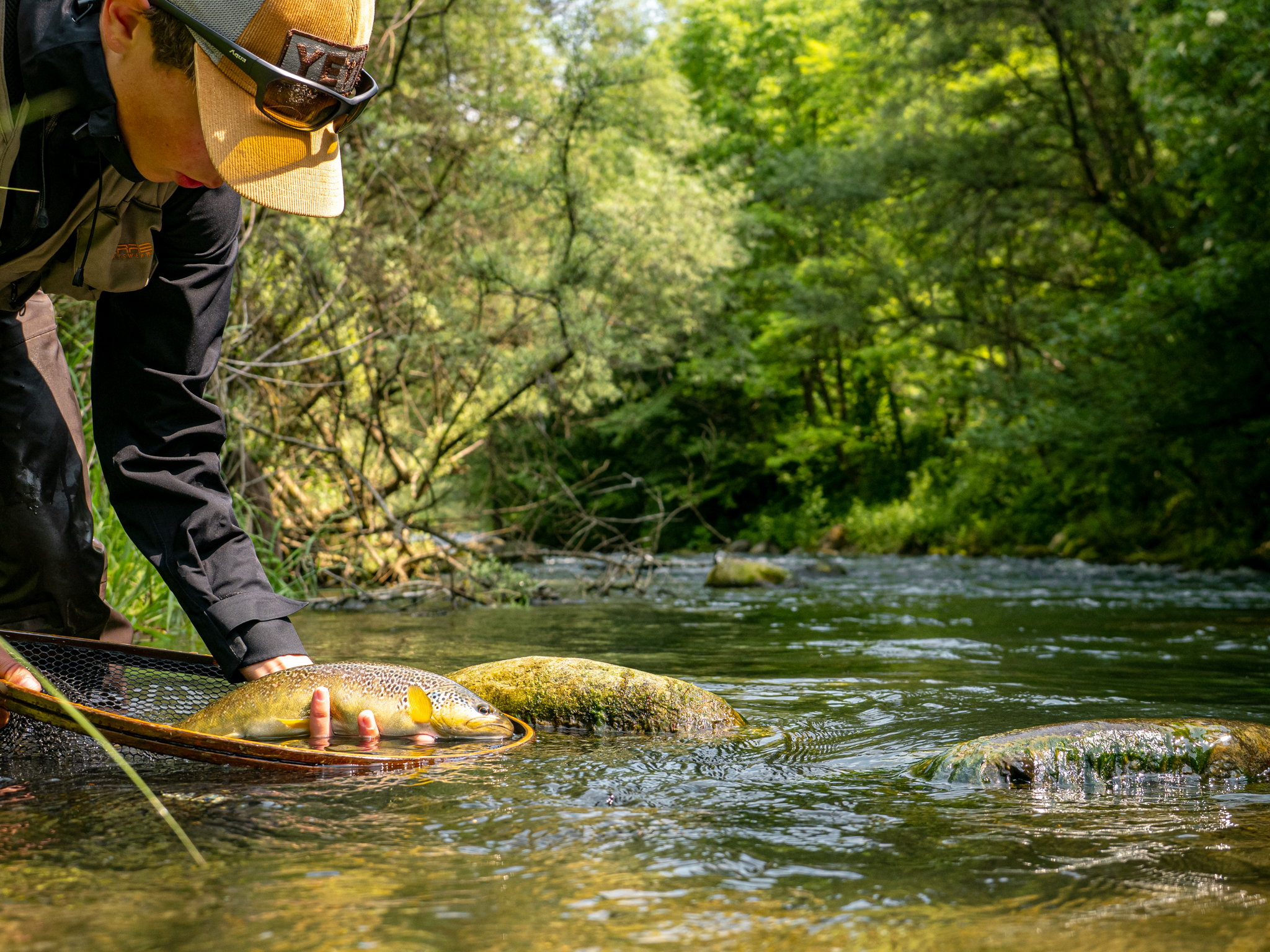
The place plays a crucial role. Trentino offers something rare: authentic environments, living waters, landscapes that aren’t just a backdrop but an essential part of the experience. Here, young anglers aren’t just spectators. They learn to engage with the environment, to read it, and to respect it. And that’s not something you can teach with words, it comes from being there, making mistakes, observing, and returning the next day with a different perspective. It’s a slow process, but that’s exactly why it works, because it leaves a mark.


Along the way, fly fishing stops being just about technique. Technique matters, of course, but it becomes a tool, not the goal. Real learning happens elsewhere: in patience, in accepting waiting and failure, in handling frustration when things don’t go your way. Lessons that reach far beyond the water. In a world that constantly pushes for instant results, learning to stay within a process, without forcing it, is deeply educational. It’s a way of giving value back to time. And this is where one of the biggest challenges with younger generations emerges: disconnection. Many kids today grow up increasingly distant from nature, not by choice, but because sometimes they lack real opportunities to experience it. When the only reference point becomes what they see on a screen, there’s a risk of building a version of reality that simply isn’t true. Without direct experience, everything remains shallow. Fly fishing, when lived the right way, breaks that distance. It brings young people back into something real, made of natural timing, physical elements, and relationships that can’t be simulated. At the same time, it calls for responsibility: preserving its core values. Because this isn’t just an activity, it’s a culture built on respect, balance, and awareness. Values that matter now more than ever.
From this experience, something emerges that can’t be forced: a genuine connection. And when that connection happens, everything changes.
The way you look at a river changes.
The way you experience a place changes.
And most of all, your sense of responsibility changes.
It’s no longer about respecting something just because you’re supposed to, but because it has become part of your own experience, something personal. Without connection, there can be no real care. If something feels distant, it doesn’t truly concern us. And if it doesn’t concern us, we’ll never feel the need to protect it. That’s why working with young people today also means creating conditions for real, meaningful experiences.
My biggest concern, looking at the new generations approaching fly fishing, is that its true meaning might get lost. That it could be reduced to technique and performance, forgetting what really matters. Through my work, I try to show that there’s so much more behind every cast, every fish, every step along the water. I do it with the hope that those who come after will fall in love with it in the same way, and that this beautiful thing we call fly fishing, together with its deep connection to nature, will never fade.
If you don’t feel a connection to something…
If you don’t love it…
You will never truly protect it.

Alberto Zanghieri
Areas: Alto Sarca, Alto Chiese and alpine lakes.
 ${ item.descriptiveDate }$
  ${ item.localityAddress }$
  Request information
 ${item.telephone}$
 Website
 Request information
 ${item.telephone}$
 Website